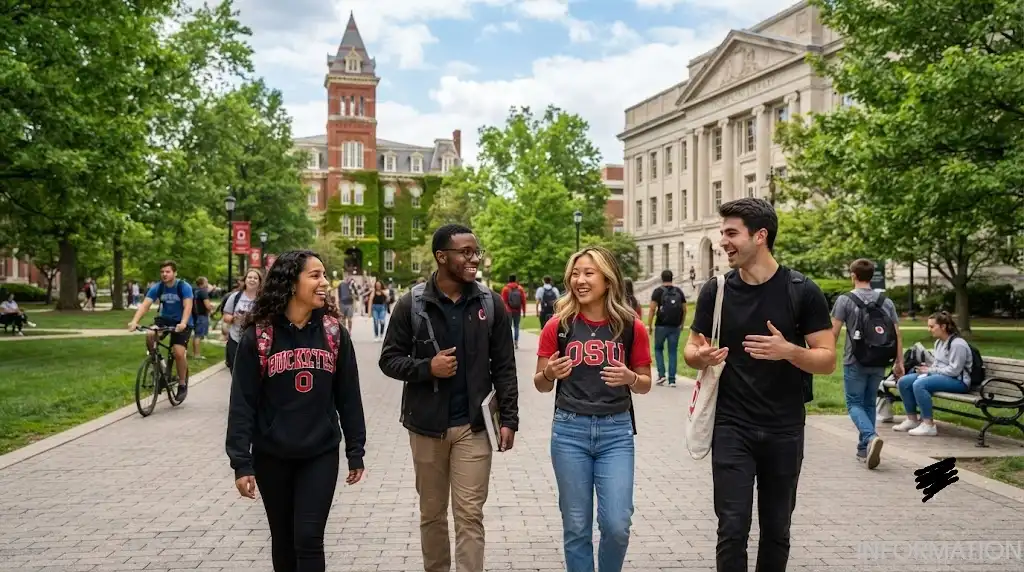
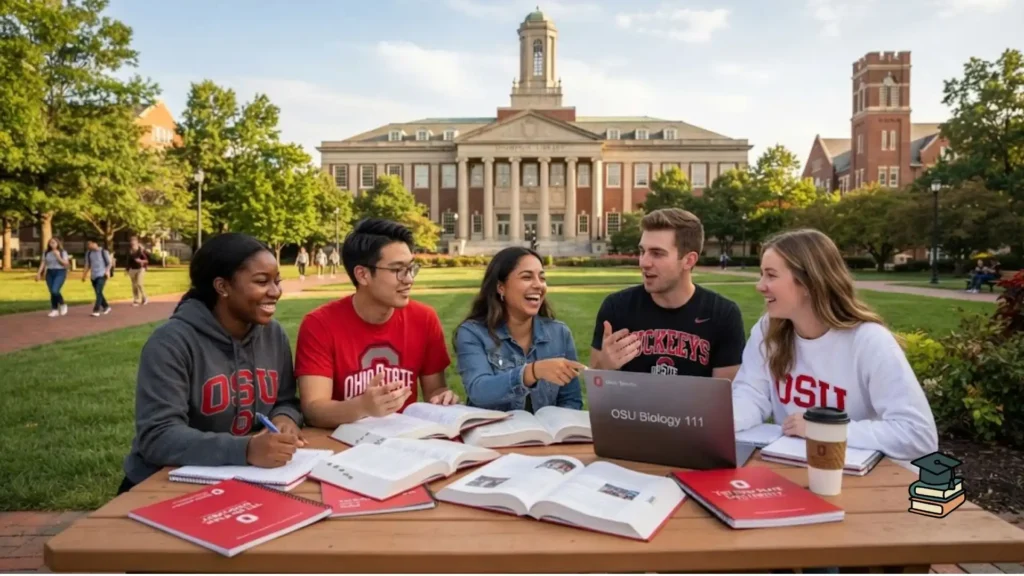
The Ohio State University, established in 1870 as a land-grant institution under the Morrill Act, operates as one of the largest public research universities within the United States. Situated in Columbus, Ohio, the university maintains a significant academic footprint and serves as a primary engine for workforce development, scientific innovation, and regional economic growth. This profile outlines the enrollment demographics, financial aid structures, and undergraduate retention metrics that define the institution’s current operational landscape.
Institutional Indicators (Academic Year 2025-2026)
Verified Statistical Indicators
| Metric Category | Statistical Value | Data Source / Reference |
|---|---|---|
| Total University Enrollment | 67,255 students (Columbus & Regional) | OSU Statistical Summary |
| First-Year Retention Rate | 93.5% | University Enrollment Report |
| National Public University Rank | 15th Overall | U.S. News & World Report |
| National R&D Expenditure Rank | 12th Nationally | National Science Foundation |
Academic Structure and Regional Enrollment Demographics
The academic infrastructure of the institution is segmented into 16 distinct colleges and schools, offering over 200 undergraduate majors and specialized professional tracks. According to the Autumn enrollment registry, undergraduate students constitute approximately 78.1% of the total student population, with the remainder enrolled in professional and graduate-level divisions. Enrollment distribution by geographical origin shows that 71.6% of matriculated students originate from the State of Ohio, while remaining cohorts represent all 50 U.S. states and over 120 foreign countries.
Demographic analyses within the student body indicate a persistent demand for programs within high-utilization sectors. Specifically, enrollment data demonstrates heavy concentrations in the following colleges:
- College of Arts and Sciences: Housing the largest proportion of enrolled undergraduates, specifically focusing on physical sciences, humanities, and social inquiry.
- Fisher College of Business: Comprising over 15% of the total undergraduate population, with specialized concentrations in logistics and corporate operations.
- College of Engineering: Enrolling over 9,400 students across accredited engineering, computing, and architectural curriculum tracks.
Financial Allocation and Institutional Accessibility Initiatives
Data indicates that affordability measures remain critical to sustaining the institution’s enrollment metrics. During the Autumn term, the university allocated USD 259 million in consolidated financial aid and institutional grants. These funding mechanisms are designed to mitigate student loan debt obligations, resulting in over 50% of the undergraduate cohort completing their baccalaureate degrees without incurring debt. Merit-based financial programs, such as the Land Grant Opportunity Scholarship, target low-income students within the 88 counties of Ohio, fully covering the cost of attendance for qualifying residents.
Empirical Student Performance and Graduation Metrics
Academic performance indicators show that the standard first-year undergraduate class exhibits high levels of preparation. Statistical records indicate that over 68% of enrolled first-year students ranked within the top 10% of their respective secondary education graduating classes. This preparation correlates directly with a 93.5% first-year retention rate, which exceeds national public university averages by a significant margin.
The transition from regional campuses—including Lima, Mansfield, Marion, Newark, and the Agricultural Technical Institute in Wooster—to the central Columbus campus remains a standardized process. Known as the «campus-change» protocol, approximately 1,100 to 1,200 students successfully transition to the primary campus annually, ensuring educational access is distributed across diverse geographic demographics within the state.
Song Qi
Resided in: Frankfurt, Germany
Degree: Master of Business Administration (MBA)
«The rigorous curriculum during my two-year MBA study at Fisher established a robust quantitative and strategic knowledge base. This academic foundation has been critical to executing international management operations and driving business growth on a global scale.»
Sandy Lopez-Zeledon
Resided in: Seattle, Washington
Degree: MBA & Veteran Support Cohort
«The peer-to-peer collaborative architecture of the graduate program was exceptional. Professors structured learning around solving real-world corporate challenges, facilitating long-term professional partnerships that transitioned immediately into active industry networks.»
Mark McClain
Resided in: Nashville, Tennessee
Degree: Master of Business Administration (MBA)
«Encountering diverse intellectual viewpoints within my cohort significantly enhanced my critical thinking capabilities. The structured class sizes allowed for focused interactions with peers, preparing me for consulting engagements at national firms.»
Institutional Resources and Research Expenditures
The National Science Foundation ranks the university 12th nationally in public research expenditures, reflecting a sustained commitment to technological advancement and clinical trials. This research infrastructure includes over 200 academic centers and specialized laboratories. Undergraduate participation is promoted via annual research forums, with more than 600 students actively presenting primary research data. These programs receive direct financial support through federal research grants, aligning undergraduate instruction with national scientific priorities.
Additionally, the institution operates 36 career fairs annually to align academic output with workforce requirements. Employment placement studies indicate that approximately 83% of graduating cohorts secure employment or enroll in advanced degree programs within 90 days of graduation, indicating strong institutional alignment with the requirements of the labor